
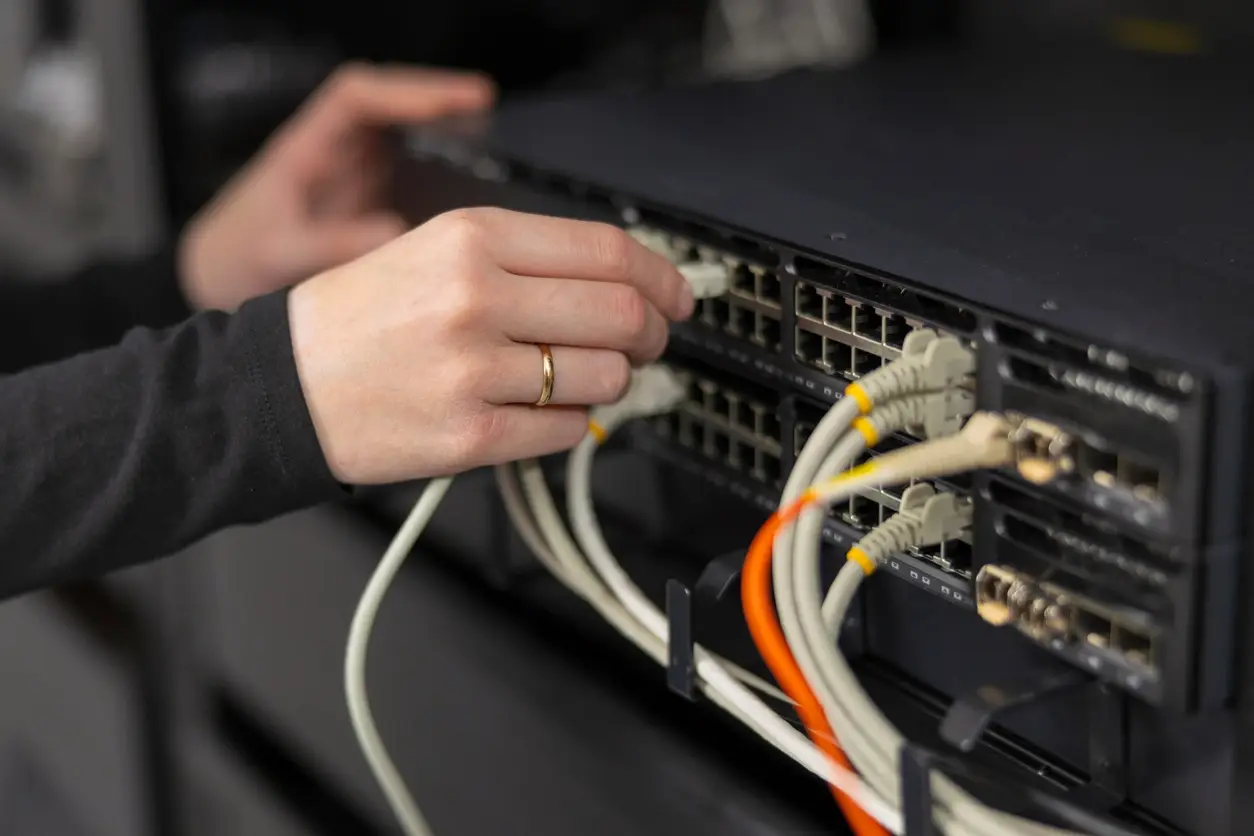
Power and internet
How Booth Power and Internet Work at Convention Centers
Who provides booth power and internet, how to estimate watts, where to place outlets, and when to choose wired, venue Wi-Fi, or a hotspot.
The short answer
At most convention centers, booth electrical and internet come from exclusive in-house or show-appointed providers and are ordered through the exhibitor kit, and your equipment plugs into the service you order. ConventionVendor.com does not supply booth power, but a quote can list what each rented device needs so your electrical and internet orders match the booth. Estimate total watts, mark outlets and drops on your floor plan, and put mission-critical demos on a wired connection.
Last reviewed October 15, 2026 by the ConventionVendor.com rental team.
Who provides booth power and internet
Most large convention centers have exclusive providers for booth electrical and internet, either in-house departments or contractors appointed by the venue or show. Exhibitors cannot bring their own electrician or run their own line into the building.
Both services are ordered through the exhibitor service kit, usually on separate forms or portals. The order covers the service itself, and labor to run power to specific spots in the booth may appear as a separate line.
Rented equipment, including anything from ConventionVendor.com, plugs into the outlet you order. That is why the power order and the equipment list belong together.
Estimating watts for your booth
Add up the wattage of everything that will run at the same time, then leave headroom for devices that spike, such as printers and fully loaded charging stations. The label on each device or its manufacturer's specifications gives the most accurate figure.
Electrical forms usually sell service by amperage or wattage, sometimes with a separate option for 24-hour power. Standard booth power is often switched off after show hours, so anything that must stay on overnight needs the 24-hour option if the show offers it.
| Device | Typical draw | Notes |
|---|---|---|
| Phone or tablet charging | Low wattage per device | Many devices charging at once adds up |
| Laptop | About 45-100 watts | Workstation-class laptops can draw more |
| 55-65 inch commercial display | About 100-250 watts | Brightness settings change the draw |
| 75-inch or larger display | More than a 55-65 inch display | Read the label for the exact model |
| 2x2 video wall | Roughly four times one panel | Add the controller or media player |
| Thermal badge or label printer | Low at idle, spikes while printing | Size for printing peaks, not idle |
| Charging station | Varies widely by size | Locker and kiosk styles usually draw more than tabletop units |
| Touchscreen kiosk | Depends on screen size and the built-in computer | Confirm with the label or your rental quote |
Placing outlets on your floor plan
Most electrical order forms ask for a floor plan showing where each outlet should land. Mark the spot behind each screen, under the counter, at the charging station, and at any kiosk, and note which device plugs in there.
If you leave placement blank, the provider usually delivers power to a default location, often at the back of the booth. Moving it after carpet is down takes time and may require additional labor.
In island booths, power may come up through floor ports or down from the ceiling, which makes the floor plan even more important. Ask the provider how power will reach the center of the booth before you finalize the layout.
Wired drop, venue Wi-Fi, or a hotspot
Each connection type has a place, and many booths use two. The right choice depends on what stops working if the connection drops.
If several devices need Wi-Fi, ask the venue's internet provider whether it can supply an access point for the booth. Bringing your own router is often not allowed on the show floor.
| Option | Best for | Watch out for |
|---|---|---|
| Wired internet drop | Live demos, streaming, payment or registration systems | Must be ordered ahead, and the cable lands where your floor plan says |
| Venue Wi-Fi ordered for the booth | Lead sync, email, light browsing | Shared airspace can slow down when the hall is busy |
| Free public Wi-Fi, where offered | Occasional staff use | Not intended for booth demos or business-critical traffic |
| Cellular hotspot | Backup, show offices, and off-site events, where the venue and show allow it | Many show floors restrict or prohibit hotspots |
Why the show floor limits wireless devices
A convention hall packs thousands of phones and laptops into one space, and every added hotspot or access point competes for the same radio channels. Enough of them can slow the venue network and other exhibitors' connections.
Exclusive contracts also play a part, since the venue's internet provider is often the only company allowed to sell connectivity in the hall. Our show Wi-Fi rules guide explains the typical policies and what to order instead.
Protecting mission-critical demos
When a demo stops working, the booth loses its main reason for visitors to stop. Put any demo that relies on the internet on a wired connection, and keep a cellular backup ready only if your show allows one.
Download videos and presentations to the device instead of streaming them, and keep an offline version of the demo for the worst case. A short recorded walkthrough on a USB drive can carry the booth through an outage.
Test the full setup on the show network during move-in. Corporate VPNs and firewalls sometimes block traffic that works fine at the office, and discovering that on opening morning leaves little time to fix it.
Frequently asked questions
How do I know how many watts to order for my booth?
List every device that will run at once, take the wattage from each label, and add headroom for printers and chargers that spike. Ask your rental company for the draw of any equipment you rent and include it in the total.
Can booth equipment plug into the wall outlets in the exhibit hall?
Generally not. Building outlets in exhibit halls are not meant for exhibitor use, and booth equipment should run on the electrical service you order through the exhibitor kit.
Do I need 24-hour power for my booth?
Only for equipment that must stay on overnight, such as refrigeration or a system that is hard to restart. Tablets and laptops can charge during show hours or overnight in a show office or hotel room.
Is venue Wi-Fi good enough for a live product demo?
It can be, but shared Wi-Fi tends to slow down when the hall fills, which is exactly when demos matter most. A wired connection is the safer choice for anything the booth depends on.
Rentals for this
- Booth Tech Kits: Lead Capture iPads, Screens, and Charging
iPads for lead capture, a monitor on a stand, and a charging station, packed as one kit for your booth and delivered for move-in.
- Show Wi-Fi, Hotspots, and Connectivity
Cellular hotspots, routers, and network gear for show offices, hotel suites, off-site events, and booths where the venue and show allow them.
- Booth TVs, Monitors, and Video Walls
TVs and commercial displays on floor stands or truss mounts, and LCD video walls, sized so your message reads from the aisle.
Read next
- Show Wi-Fi Rules: Hotspots, Venue Internet, and Exclusives
Why show floors limit hotspots and access points, what the typical rules look like, what to order instead, and where a hotspot still makes sense.
- Trade Show Booth Technology Checklist by Booth Size
An item-by-item list of the screens, lead capture devices, charging, connectivity, cables, and spares a booth needs, sized for 10x10 through island booths.
- Booth TV and Display Size Guide for Trade Show Exhibitors
How to choose booth screen size by booth size and viewing distance, how high to mount it, and when a 2x2 video wall makes sense.
Want us to plan it with you?
Send the show, venue, booth size, and dates. We will recommend the equipment and quote the complete setup, delivered around your move-in.